






The USDA’s War on Small Farms: What Happened and Why It Still Matters
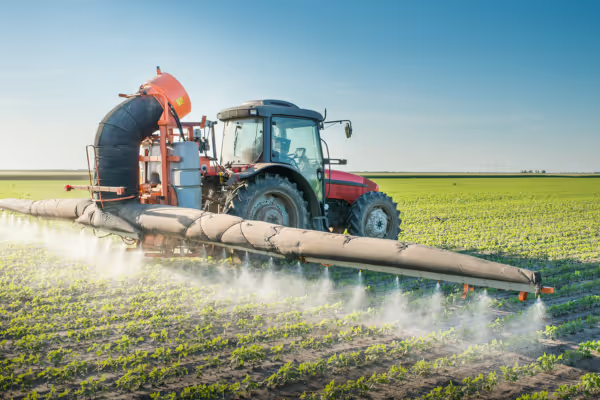
The United States Department of Agriculture (USDA) was established with a mandate to support American farmers and ensure a stable food supply for the nation. For much of its history, the USDA did exactly that, helping to modernize agriculture, provide price supports, and protect the livelihoods of family farmers. But over the past half century, the agency has undergone a dramatic transformation, one that has largely abandoned the small farmer in favor of large agribusiness interests.
The Rise of Industrial Agriculture
The post-World War II era saw a fundamental shift in American agriculture. Government policies, including USDA programs that favored large-scale production and economies of scale, accelerated the consolidation of farms. The number of farms in the United States peaked at about 6.8 million in 1935 and has declined precipitously since, falling to around 2 million today. During this same period, the average farm size has grown dramatically, as large agribusiness operations absorbed smaller farms.
This consolidation was not simply a natural economic process. It was actively shaped by USDA policies that favored large producers. Price support programs, crop insurance subsidies, and marketing orders all tended to benefit larger operations that could take advantage of economies of scale, while small and diversified farms struggled to compete.
The USDA and the Organic Sector
One of the most contentious battlegrounds in the conflict between small farms and agribusiness has been the organic sector. When the USDA established the National Organic Program (NOP) in 2000 to regulate the use of the "organic" label, it created a certification system that was ostensibly designed to protect consumer trust and support sustainable farming. In practice, however, the NOP has been shaped by the influence of large agribusiness operators who have sought to loosen organic standards and undercut the economic position of small organic farms.
Under pressure from large agribusinesses, the USDA has at various times allowed practices in certified organic operations that many small organic farmers and consumer advocates regard as incompatible with the spirit of organic agriculture. The use of hydroponic production (growing plants in nutrient solutions without soil) in certified organic operations, for example, has been a source of intense controversy, with small soil-based organic farmers arguing that this practice undermines the ecological principles that organic farming is supposed to embody.
Food Safety Regulations as a Tool of Consolidation
Perhaps the most direct mechanism by which the USDA has harmed small farms is through the implementation of food safety regulations that impose disproportionate compliance costs on small producers. The Food Safety Modernization Act (FSMA) of 2011, while ostensibly designed to improve food safety, created a regulatory framework that many small farmers argued was designed with large industrial operations in mind and imposed burdens that were prohibitive for smaller producers.
The compliance costs associated with FSMA provisions—including requirements for written food safety plans, water testing, training, and recordkeeping—can run into tens of thousands of dollars annually for a small farm. While the legislation included some provisions aimed at accommodating smaller operations, critics argue that these exemptions were too narrow and that the overall regulatory framework still disadvantages small and direct-market farmers.
The Raw Milk Controversy
The USDA's approach to raw milk—unpasteurized milk sold directly from farms to consumers—illustrates the tension between food safety regulation and the rights of small farmers and consumers. The federal government prohibits the interstate sale of raw milk for human consumption, and the FDA and USDA have periodically cracked down on farms selling raw milk in states where it is legal under state law.
Small dairy farmers and raw milk advocates argue that the strict regulation of raw milk is driven more by the economic interests of large commercial dairy operations than by genuine food safety concerns. They point to the long history of traditional raw milk consumption, the existence of regulatory frameworks in many countries that accommodate raw milk sales with appropriate safety protocols, and the potential health benefits that some consumers attribute to raw milk.
What Still Matters Today
The USDA's treatment of small farms is not merely a historical issue. The forces that drove the consolidation of American agriculture are still very much at work today. The lobby influence of agribusiness on USDA policy remains powerful, and the regulatory environment for small farmers continues to present significant challenges.
At the same time, there is growing consumer interest in locally produced, sustainably grown food, and a vibrant movement of small and diversified farmers who are building alternative food systems through farmers' markets, community-supported agriculture (CSA) programs, and direct-to-consumer sales. These farmers are not just producing food; they are stewards of biodiversity, community anchors, and carriers of agricultural knowledge that is in danger of being lost.
Supporting these farmers means demanding USDA policies that genuinely protect and promote small-scale agriculture, create fair regulatory environments, and resist the influence of agribusiness lobbying. The future of food sovereignty in America may well depend on it.
Subscribe to Goldcare to access the full library of health insights ›




.avif)
.avif)
.avif)